


Law Firm Website Design Cost and What Your Quote Should Include

Table of Contents

Share This Article

Law Firm Website Design Cost and What Your Quote Should Include

Two law firm website quotes can look very different even when both describe a similar number of pages. One may cover a design and a few supplied paragraphs. Another may include a content restructure, attorney profiles, integration work and a careful migration of an established site. The first step is to compare the work, not just the total. A useful quote makes the responsibilities, exclusions and ongoing costs clear enough that the firm can evaluate them.

What is the minimum budget?

Allusive Digital’s minimum project range is USD 1,000–2,000 for US projects, CAD 1,000–2,000 for Canadian projects and AUD 1,000–2,000 for Australian projects. These are local-currency minimum ranges, not equivalent currency conversions or fixed packages for every law firm.

A site with many practice areas, detailed profiles, specialist integrations or substantial content work may require a higher budget. The written quote should reflect those requirements. Our law firm website design services explain the types of work to define.

The main factors behind a law firm website quote

Practice-area structure

Count distinct content and layout requirements, not only URLs. A set of pages using one clear pattern differs from several services that need their own structure and content. Each page should answer a real prospective client question rather than repeat the same introduction.

Attorney and team profiles

Profiles require accurate information and approval. Agree who supplies biographies, images, qualifications and contact details, and how they will be kept current. A reusable profile layout can make later updates easier.
Writing and review
Development and legal-content approval are separate responsibilities. The proposal should explain whether copy is supplied, drafted, edited or simply entered into the CMS. The firm should review specialist claims and any necessary wording before publication.
Forms and connected systems
A short initial enquiry, a booking link and a more complex intake integration have different requirements. Identify the intended workflow and the system responsible for any sensitive information. Do not assume a general contact form can replace the firm’s approved process.

Redesign costs include what happens to the old website

A redesign should begin with an inventory of useful content and existing URLs. Some pages may need only a better layout; others may need rewriting or consolidation. Where URLs change, redirects and internal links belong in the scope.
Ask how the provider will check important journeys after launch. Loading the homepage is not enough to verify that consultation routes, forms and connected tools still work. If the existing website receives enquiries or search traffic, those assets deserve attention during the change.

Compare platforms through the work your team will do

The CMS affects how routine editing and maintenance happen. A WordPress website may suit one firm’s content workflow, while another may prefer Webflow development. Evaluate required features, access and ongoing responsibilities rather than choosing solely by familiarity with a platform name.

Ask who will publish an attorney update, change a practice-area page or maintain an integration. Those questions can reveal operating costs that are not visible in the design fee.

Separate one-time work from recurring expenses
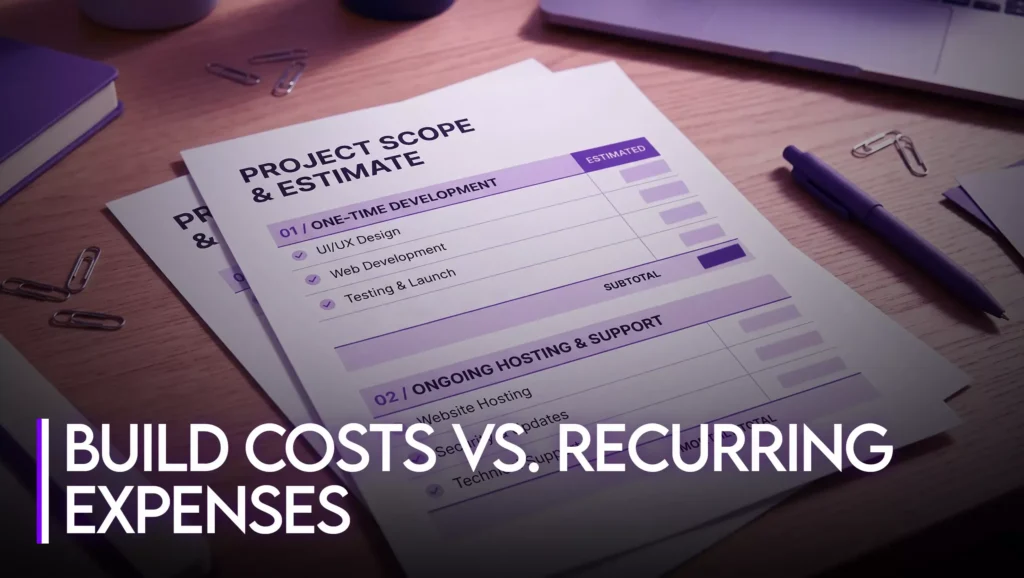
The proposal should distinguish design and development from hosting, platform subscriptions, extensions and ongoing support. Confirm account ownership and any renewal obligations. Also clarify how changes outside the agreed scope will be handled.

A low build fee can be difficult to compare with a higher one if the two proposals assign very different responsibilities to the firm. The website pricing page provides the same scope-based approach across project types.

A practical checklist for comparing quotes

Are the practice areas and page templates named? – Is it clear who writes, supplies and approves the content? – Are profile pages, forms and integrations defined? – Does a redesign include URL and migration planning? – Are platform and ongoing costs separated from the build? – Does the handover explain access and maintenance? – Are additional changes assessed before they affect the project?
Is a larger website always more expensive?
Not necessarily. A larger set of repeatable pages can be simpler than a smaller site with custom workflows. Content quality, unique layouts and functionality matter alongside page count.
No. Search visibility depends on more than the build. The quote should describe work and verification, not guarantee a position or a number of consultations.
Yes, where the first release remains coherent and useful. Identify the essential information and enquiry journey first; separate later additions explicitly.

Get a scope your firm can evaluate

Prepare the current URL, practice areas, required integrations and content responsibilities. Discuss your law firm website project to turn that information into a clearer scope.


Join Allusive Digital marketing newsletter

Related Blogs