

The digital landscape is no longer defined by separate silos for “mobile” and “web.” As we look toward 2026, the most significant trend is the seamless convergence of these experiences. Users now demand fluid, consistent, and powerful interactions whether they’re on a smartphone, tablet, or desktop. This evolution, accelerated by post-pandemic digital adoption and ever-rising user expectations, requires businesses to think holistically about their digital presence.
For business owners and decision-makers in the United States, Canada, and Australia, understanding these converging trends is not just about keeping up—it’s about securing a competitive advantage. This guide will dissect the mobile and web application trends poised to dominate 2026, providing you with actionable insights to prepare your strategy. At Allusive Digital, a Los Angeles-based digital agency, we partner with forward-thinking businesses to navigate this transformation, leveraging the right blend of mobile app development services and cutting-edge web application development to build future-proof digital products.
The Great Convergence: Blurring Lines Between Mobile & Web
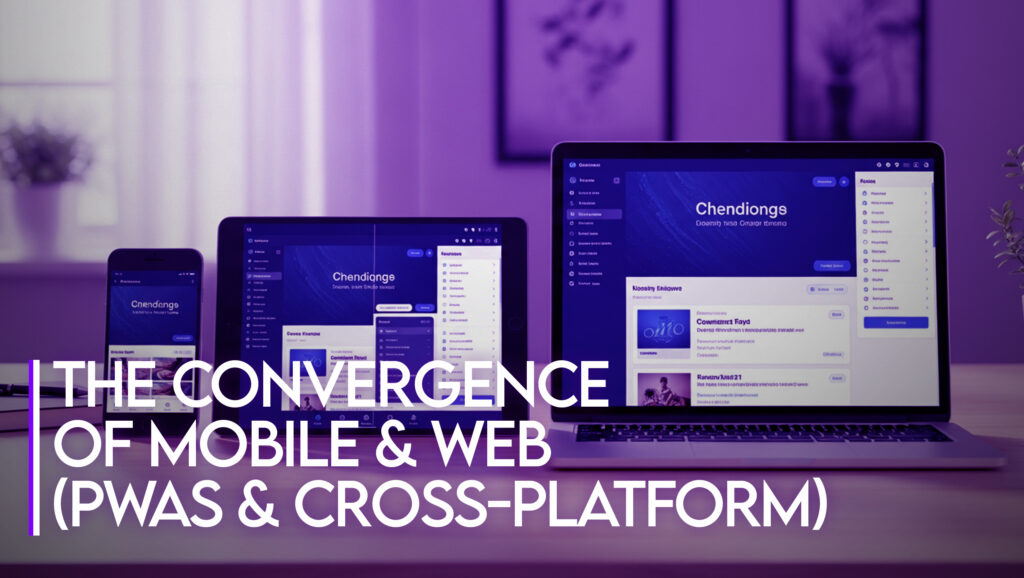
The distinction between a native mobile app and a web application is becoming increasingly academic for the end-user. The driving force is the demand for app-like experiences everywhere.
- The Rise of Progressive Web Apps (PWAs): PWAs are the ultimate bridge, offering the reach of the web with the engagement of a native app. They work offline, send push notifications, and can be installed on a device’s home screen. For many businesses, investing in progressive web app development is a strategic move to serve both mobile and desktop users with a single, maintainable codebase, reducing development costs and complexity.
- Mobile-First is Now Only Mobile-First: With mobile-first indexing from Google being the standard for years, responsive web design services have evolved. It’s no longer about making a desktop site work on mobile; it’s about designing for the mobile experience first and expanding outward. Performance, particularly Core Web Vitals, is a direct ranking factor and a critical user retention metric.
- Unified Development Frameworks: Technologies like Flutter, React Native, and frameworks like Next.js enable teams to build for multiple platforms from a unified codebase. This approach, central to modern cross-platform app trends 2026, accelerates time-to-market and ensures a consistent brand experience across iOS, Android, and the web.
Top 5 Mobile App Trends Shaping 2026
1. AI-Personalized Experiences
Generic apps are fading. AI in mobile apps is shifting from cloud-dependent to on-device processing, enabling real-time, context-aware personalization without compromising user privacy. Think of an app that predicts your next order, curates content uniquely for you, or adjusts its interface based on your usage patterns—all processed locally on your device for speed and security.
2. Augmented Reality (AR) Integration
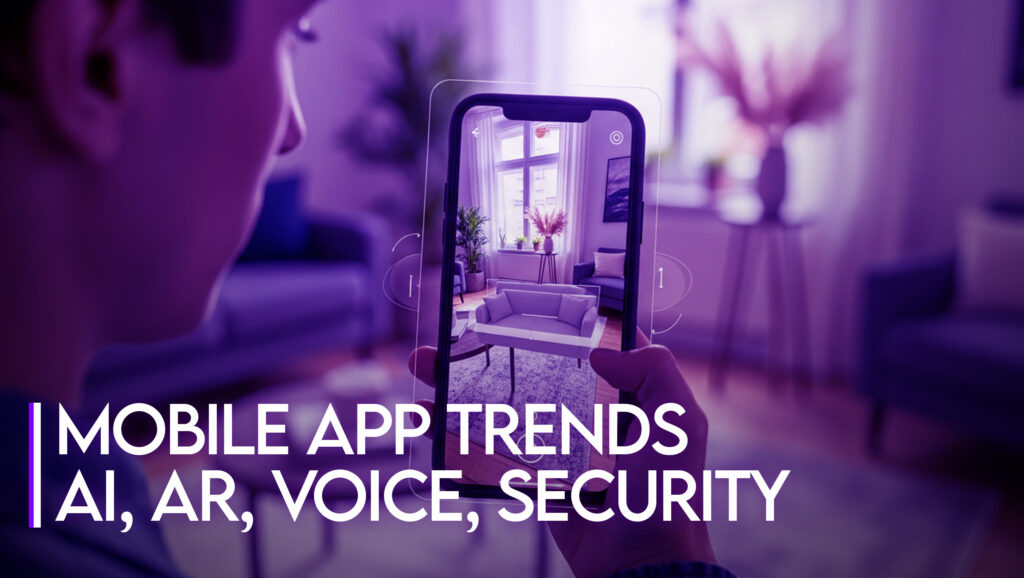
Moving beyond gaming, AR is becoming a utility. Retail apps allow you to “try on” clothes or visualize furniture in your home. Training and field service apps overlay instructions on real-world machinery. Navigation apps blend directions with live camera views. Integrating AR is a powerful way to enhance utility and user engagement.
3. Super Apps & Modular Architecture
Inspired by models like WeChat, the “Super App” concept—a single app offering a suite of services (e.g., messaging, payments, shopping, travel)—is gaining traction in Western markets. The technical backbone enabling this is a modular, micro-app architecture. This allows businesses to offer a core app experience where users can activate additional, seamless services as needed.
4. Voice & Gesture-Based Navigation
As interfaces become more immersive, touch is being supplemented. Voice commands powered by improved natural language processing allow for hands-free operation. Advanced gesture controls, leveraging LiDAR and improved cameras, enable users to navigate apps with simple hand movements, enhancing accessibility and creating novel interaction models.
5. Emphasis on App Security & Privacy
User trust is paramount. Trends are moving towards blockchain for secure, transparent transactions, zero-trust security models that verify every access request, and a heightened focus on data ethics. Clear data usage policies and robust security features are no longer optional; they are key selling points and requirements for app store approval.
Top 5 Web Application Trends for 2026
1. AI-Driven Dynamic Web Experiences
Websites will become living, adaptive entities. Using AI, a web application development company can build sites that dynamically adjust content, layout, and calls-to-action in real-time based on the user’s behavior, location, device, and past interactions. This creates a one-to-one marketing experience at scale, dramatically increasing conversion potential.
2. Motion UI & Immersive Storytelling
Static pages are giving way to cinematic web experiences. Advanced, performance-optimized animations, scroll-triggered effects, and micro-interactions guided by Motion UI principles create emotional connections and guide user journeys. This trend turns website navigation into an engaging, memorable story about your brand.
3. Web3 & Decentralized Apps (dApps)
While still emerging, Web3 principles are entering mainstream web design. This includes token-gated content (where access requires a specific digital asset), integrated smart contracts for transparent transactions, and user-owned data models. For communities and brands built on exclusivity or new economic models, dApps offer a novel framework.
4. Low-Code/No-Code Proliferation
Democratization of development is accelerating. Platforms like Webflow and Bubble empower marketing and product teams to build functional, beautiful web applications without deep coding knowledge. This frees up specialized developers at a custom software solutions provider like Allusive Digital to focus on complex, core business logic and system integration.
5. Advanced API-First Architectures
The future is headless. An API-first approach, using a headless CMS and a microservices backend, decouples the front-end presentation layer from the back-end data logic. This allows businesses to deliver consistent content and functionality seamlessly across websites, mobile apps, kiosks, and IoT devices—enabling a true omnichannel strategy.
Why a Unified Strategy is Non-Negotiable

Adopting these trends in isolation is not enough. Success in 2026 demands a unified digital strategy.
- Consistent User Experience: A user should recognize your brand instantly, whether they interact via your mobile app or your website. Unified design systems and shared backend services ensure this consistency.
- Cost Efficiency: Leveraging cross-platform development frameworks and shared cloud infrastructure (like AWS, Azure, or Google Cloud) reduces development and maintenance costs, maximizing ROI.
- Scalable Foundations: A modular, API-driven architecture allows your digital assets to scale independently. You can update your web frontend without touching your payment microservice, ensuring agility and resilience.
How Allusive Digital Helps Businesses Stay Ahead

Navigating this complex landscape requires a partner with deep technical expertise and strategic vision. For businesses across the USA, Canada, and Australia, Allusive Digital serves as that guide.
Our process begins with a discovery phase to align technology with your business goals. We then strategically select a tech stack—whether it’s Flutter for a unified mobile experience, a headless CMS for an omnichannel web presence, or a robust backend for custom software solutions. We develop using agile methodologies, ensuring transparency and adaptability, followed by rigorous QA and ongoing support and optimization.
Our expertise spans both premier mobile app development services and enterprise-level web application development, giving us the unique perspective needed to build your converged digital future.
Conclusion & Call to Action
The digital frontier of 2026 will be defined by intelligent, seamless, and immersive experiences that blur the line between mobile and web. The businesses that thrive will be those that adopt these trends early, building on a unified, scalable, and user-centric foundation.
Understanding these trends is the first step. Implementing them effectively is what separates leaders from followers.
Ready to build your 2026 digital roadmap? Schedule a free consultation with Allusive Digital’s strategists. We’ll audit your current digital assets, discuss your business objectives, and outline a strategic plan to leverage these trends for tangible growth. Contact us today to claim your competitive advantage.